
For one of his high school classes my son has been reading a book which touches on various eastern religions and philosophies of life. At home we’ve been discussing how these ideas compare and contrast with Christianity. The key difference is that with every man-made religion the goal is for human beings to strive to reach God, fulfillment, or heavenly bliss through some type of achievement, service, discipline, or merit. Yet Christianity recognizes this is not possible, therefore God is the one who reaches out to save people. Christianity is not human-centric, but Jesus Christ-centric. Christianity and the Bible teach that everything rightfully revolves around God. He always was and always will be. He lovingly created and sustains the universe, including people. Although people reject God by default in order to live life on their own terms, it only ends in death, not life. Fortunately, God loves everyone too much not to reach out. He sent Jesus, God the Son, to die and rise again so that anyone who trusts and obeys him can have abundant life now and forever. Simply put, Jesus’ death on the cross and resurrection changed the course of human history and the world. No other religion, but Christianity, recognizes this glorious truth. If you humbly embrace what Jesus has graciously done for you at the cross, your life will change enabling you to become all your were designed to be in Jesus.
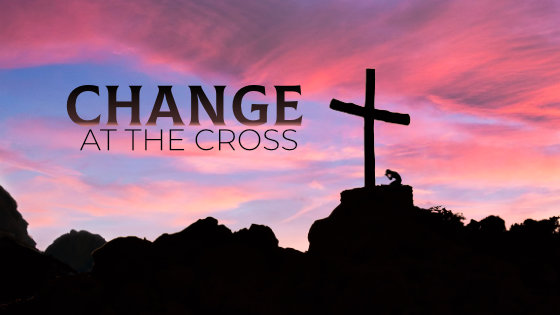
Some people mistakenly view the cross as a sign of shame, defeat, and finality, for that is why the Romans invented the heinous punishment of crucifixion. In one sense, that is true. On the cross Jesus declared with his last agonizing breath, “It is finished” (John 19:28-30). Amazingly, his death atoned for the sin of every person (Galatians 3:10-14). That is why he came (John 3:16-18, 17:1-26; 2 Corinthians 5:21). But it’s not the only reason. As always, when God acts to save he accomplishes multiple purposes at once. What people view as terminated, hopeless, or worthless, God can utilize as a catalyst for something glorious. Just as a seed must die to bring forth new life and fruit, Jesus’ “ending” enabled a novel beginning (John 12:23-26). When Jesus innocently died for us, he satisfied God’s wrath against sin and enabled people to be reconciled with God and adopted into his family. But that was only one chapter in God’s salvation story. When Jesus rose from the dead three days later he enabled people to not only be forgiven, but also restored. His resurrection brought victory over death, sin, and Satan to all who believe in him (Colossians 2:6-15). Those who trust and obey Jesus receive new life through his Spirit who God gives to live in them. His Spirit comforts, counsels, corrects, and empowers them to become like Jesus. They are now able to live rightly, to represent Jesus in his ministry of reconciliation, and to prepare to reign when Jesus consummates his kingdom. So the cross represents a necessary end which ushers in an even grander beginning.
That’s how faithful, loving, almighty God works. From the curse of the cross he brings about the blessing of true life. From nothing he spoke the wonderful universe into existence. From the insignificant dust of the earth he incredibly formed the first person. What people intend for harm, God uses for good to save. We see this in the lives of so many people who put their faith in God–like Joseph, Moses, Israel, David, Elijah, Daniel, Paul, the apostles, the church, and of course, Jesus to name just a few. God heals the broken. He redeems the wayward. He frees the captive.
Anyone who comes to God willing for him to change them, becomes continually better. Solomon, king of Israel, recognized this truth in several proverbs. “There is a way that seems right to a man, but its end is the way to death” (Proverbs 14:12). “Commit your work to the Lord, and your plans will be established” (Proverbs 16:3). “Trust in the Lord with all your heart, and do not lean on your own understanding. In all your ways acknowledge him, and he will make straight your paths” (Proverbs 3:5-6). In fact, the paradoxical wisdom of the cross is that death precedes life. Just as Jesus had to die to enable new life, so too, you must die to self-centered areas of your life by faith in order to experience his victory and renewal process in that part of your life. There is no other way. Jesus taught, “Whoever wants to be my disciple must deny themselves and take up their cross daily and follow me. For whoever wants to save their life will lose it, but whoever loses their life for me will save it. What good is it for someone to gain the whole world, and yet lose or forfeit their very self?” (Luke 9:23-25). Salvation isn’t just a one-time event. It is also an ongoing process. Deny your way of doing things in favor of God’s way. Place your time, your talents, your treasures, and even your trauma at the cross. Let God redeem them. Entrust your job, finances, education, marriage, family, relationships, and wellness to God. Submit your past mistakes, present worries, and future goals. Then let him change you through each of them. Live for eternity now. Prayerfully meet Jesus at the cross. Follow him. Listen to what he tells you. Die to anything that keeps you from growing closer to him. Then by his power and providence, begin a fresh start in that area. Over time God will transform you to become like Jesus and to help others do the same.