
For this note, I’m doing things a little differently. I’ll interview a special guest, one of my favorite people to spend time with. In the studio today, which is really just a closet with a bunch of clothes that works well for sound proofing, is my daughter, Hannah.
Hannah: Hi.
Greenelsh: So last Sunday when we were driving home from church service, I was sharing with you and the rest of the family about how I appreciated the young man who sat behind us. I hadn’t seen him in awhile, but a year or two ago we had hiked and enjoyed a really meaningful conversation just about life and God. Even though I didn’t know him at the time I was struck by and appreciated that he was so open, sincere, and teachable. I want to be that way also. It’s good to approach life that way.
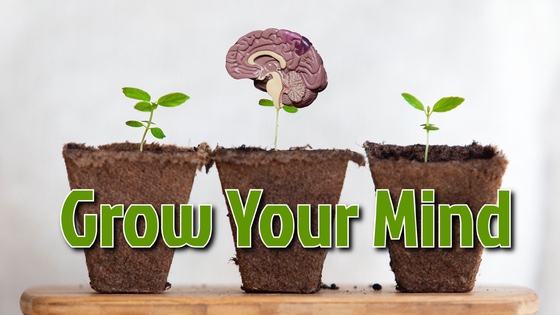
Hannah: Yes, exactly. It really shows a growth mindset. You may not be familiar with that term. It was coined by a researcher, Carol Dweck, who defines it as the belief that your learning and intelligence can grow with time and experience. In other words, maybe you’re not good at a skill right now, but you can progress and eventually accomplish a goal that you might have. For example, we may not be good at math because our parents weren’t good at it or we failed in the past. But that’s really having a fixed mindset–thinking that your intelligence and abilities are fixed. You know you’re not good now and won’t ever be. But that’s really the wrong way of thinking about it.
Greenelsh: I definitely could see the applications in education. I know that your are training to become a teacher so this is definitely on your mind with your coursework and with student teaching. How does it affect other areas of your life and spheres of influence?
Hannah: One of the things I will be doing this summer is counseling at a worldview conference called Summit which happens in Colorado and Georgia. This is just a place for young adults to come and learn about controversial issues, Christianity, and religion and how culture is shaping us. My role will be to facilitate small group discussions and try to help people understand answers to life’s big questions. This might seem like a daunting task, I feel like it is. Sometimes I feel like I don’t have all the answers and I don’t. I have to be humble about that, but realize I can prepare, get better, and progress. Even in the moment I just have to remember that I can say I don’t know the answer right now, but I am so willing to go and find out more and talk with you later.
Greenelsh: I remember when you went to Summit as a student a few years ago and now how much you have grown because you realize these are important topics that you want to be more engaged with and have a better answer for. You could have approached it negatively with the excuse that this is beyond me or to foreign to think about so I don’t see myself excelling in any of these areas. But you didn’t. You followed Peter’s advice in the Bible where he says to always have an answer for the hope you have within. So it’s neat that you see not only does a growth mindset affect you, but you are convinced it will help the students you will counsel at Summit.
Hannah: For sure.
Greenelsh: What advice would you give somebody about how they could improve their growth mindset?
Hannah: One thing that I use is self talk. Sometimes I find my mind is telling me that I can’t do something or I won’t ever be good at that. Really you have to just stop those thoughts when they come to you. Tell yourself you may not be good at this, yet. There is great power in using the word, “yet.” The next step is to ask how can I improve myself in what I’m doing. It may be a small step for me. One thing I can do in my student teaching is to work on my classroom management. One thing I’ve decided to do is write down one thing that went really well today that I did in managing my students. Along with that where is an area that I need to improve. Also just listening to my master teacher and asking her for strategies that I could use. Just taking those small steps can help me improve in that area.
Greenelsh: As a teacher myself I see what you mean. I can also think of practical things that anyone could use. We are all students of life, so even if you are not in school just thinking of always wanting to continuously improve is starting to get in line with what growth mindset is all about.
- SET A GOAL It could be something as simple as setting a goal and working toward that. That’s progression, that’s learning, that’s changing, that’s trying to improve.
- READ A BOOK Books are incredible. They can transcend space and time. They can take us to places and expose us to cultures and ideas that maybe we don’t have around us in personal contact. So vicariously learning through a book.
- SERVE OTHERS That one-on-one or group contact where you are putting yourself out there and having to use all that you have been given–your time, talents, and treasures to help someone else. That’s going to change you and help you grow.
- LEARN SOMETHING NEW It could be anything. It doesn’t have to be from a book. It could be a skill, learning a new culture, or a new language. I know in our family we use Duolingo. That’s been a lot of fun. It’s a great app and a great way to learn a language.
So it’s really about expanding your horizons. I love how you put it by adding the word, “yet.” Just recognizing that we may be good at a lot of things, but we could be even better. With things that we are not so good at, we don’t have to stop there. We can get better at those too. So there is just more to discover about ourselves, other people, and this world. That brings us to the bigger picture. My question to you is how does this perspective affect your relationship with God?
Hannah: That’s a really important question. Even though the terms growth mindset and fixed mindset and the research behind them were done by a secular research I assume, I think these concepts can be applied to the Christian life. We start out as baby Christians and we don’t know much. We can go back to the ways of the flesh easily. But as we seek God over the course of our lives we change and mature. We do grow. It doesn’t mean once we’ve matured that we’ve arrived and we don’t need to do anymore. Going through the Christian life is a lifelong learning process. It’s dynamic and it’s really beautiful that we get to walk with God through it and that we are never alone. I kind of picture it like he is the one whispering those growth mindset to us and saying, “You can keep going. I’ve given you my Holy Spirit.” In contrast, Satan is trying to tear us down and say, “You’ll never be enough.” But God has spoken truth into us and he has given us that so we can keep on going and maturing with him.
Greenelsh: That’s true. I know the apostle Paul talks about not having quite arrived yet. He wrote in Philippians, “Not that I have already obtained this [which is being transformed into the likeness of Jesus] or am already perfect, but I press on to make it my own, because Christ Jesus has made me his own…Forgetting what lies behind and straining forward to what lies ahead, I press on toward the goal for the prize of the upward call of God in Christ Jesus” (Philippians 3:12-14).
So you can see from those verses God definitely talks about our relationship with him as a process not just a destination. The process is so important. He is so faithful to meet us wherever we are at because he loves us. But he loves us too much to leave us there. He’s always calling us higher up and farther in as C.S. Lewis puts it. So it’s having humility that we don’t know it all–that there is more God has for us. It’s having dependence on him recognizing it’s him working in us and through us. We are not striving to reach self-fulfillment or to make ourselves better. We are relying on him to do that through Christ.
In fact, it even says in the book of Philippians that I can do all things through Christ who gives me strength (Philippians 4:13).
It’s also having an eagerness and a joy to learn. There is so much God has for us if we are faithful, available, and teachable. It’s neat to know you have seen that and we got this chance to share it with our listeners and those following the blog. I really appreciate you joining me today. I want to let you know to that I’m just so proud of you. I’m proud to see all you are doing in becoming a teacher and even more so your heart for God and your desire to just grow in him. That’s encouraging to me. Thanks.
Hannah: Thanks.